You’ve got the land. Maybe you’ve had it for years, or maybe you just closed on it last month. Either way, there’s something you want to build on it — a home, a pole barn, a garage, an outbuilding, a shop. And somewhere between “I want to build here” and “the contractor shows up with materials,” there’s a phase that determines whether everything that comes after goes smoothly or turns into an expensive series of problems.
That phase is site preparation.
It’s not glamorous. It doesn’t get much attention in the planning stages. But every builder, every foundation contractor, and every experienced property owner who’s been through the process will tell you the same thing: the quality of your build starts with what happened to the ground before the first concrete was poured.
This guide covers exactly what site preparation involves in Michigan, why each step matters, and what you need to know before the work begins.
What Is Site Preparation?
Site preparation is the process of transforming raw or undeveloped land into a buildable surface. It bridges the gap between land clearing and actual construction — taking a piece of ground that’s been cleared and making it structurally ready to support whatever you’re building.
For most Michigan properties, site preparation involves three core services working in sequence:
- Tree removal — getting the right trees off the site cleanly and safely
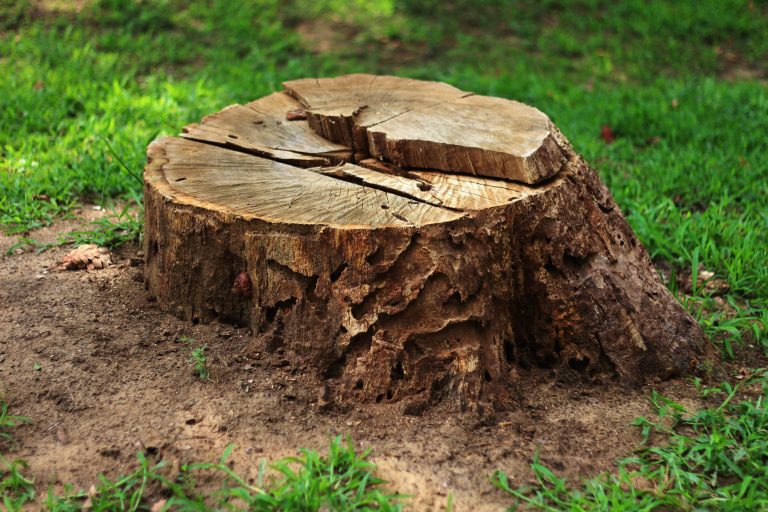
- Stump removal — eliminating root systems that will cause problems underground
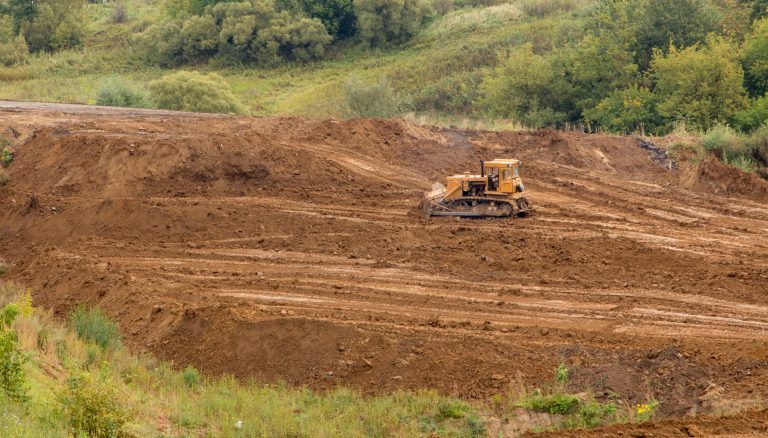
- Grade leveling — shaping the land surface so water drains correctly and the ground can properly support a structure
Each step matters. Skipping or cutting corners on any one of them creates problems that don’t show up immediately — they show up later, when they’re expensive to fix.
Why Site Preparation Is Different in Michigan
Michigan’s climate and soil conditions make site prep more demanding than in many other parts of the country — and that’s not an exaggeration.
The freeze-thaw cycle is relentless. In mid-Michigan, temperatures cross the freezing point dozens of times each winter. Water gets into the soil, freezes, expands, and shifts. Any structure that isn’t properly isolated from this movement — through correct foundation depth and proper drainage — will eventually show the consequences in cracked foundations, shifted floors, and failed slabs.
Michigan’s frost line sits around 42 inches deep, meaning foundations must extend below that depth to avoid frost heave — the phenomenon where frozen ground expands and pushes structures upward. That starts with site prep done right.
Michigan soil is a patchwork. Michigan has heavy clay soils that expand and contract significantly with freezing and thawing, putting stress on foundations. Sandy soils can erode or shift if not properly compacted and drained. Knowing what you’re working with on your specific site matters — and it affects every decision about grading, drainage, and base material.
Water is everywhere. Between spring snowmelt, heavy summer storms, and Michigan’s general tendency to stay wet longer than you’d expect, water management isn’t optional. A poorly drained building site doesn’t just stay muddy — it compromises foundations, accelerates wood rot, creates soil instability, and makes the construction process itself significantly harder and more expensive.
Step 1: Tree Removal
If your building site has trees that need to come down, that’s where site prep begins. Tree removal for a construction site is different from typical landscape tree removal — the goal isn’t just to get the tree down safely, it’s to remove it in a way that sets the site up correctly for everything that follows.
What’s Involved
Trees within and around the footprint of your planned structure need to be felled and removed. It’s best to clear an area at least 4 feet beyond your building’s footprint in all directions — this gives contractors room to work and helps prevent ground shifting near the structure.
For trees right at the build area boundary, the removal method and direction of fall matter. A tree dropped carelessly can damage surrounding vegetation you want to keep, disturb soil outside the work zone, or create debris problems that slow everything down.
Timber Value
Depending on the species and size of the trees being removed, there may be usable timber on your site. Hardwoods like oak, maple, and cherry have real value. Even if the timber isn’t worth milling, larger diameter material can often be bucked into firewood. It’s worth discussing this with your site prep contractor before the work starts — sometimes what looks like a disposal problem is actually a resource.
Don’t Leave Anything Standing That Shouldn’t Be There
Once you’ve committed to a building location, the tree removal decision is also a commitment decision. Trees left just outside the planned footprint that will eventually be an issue — blocking equipment access, threatening the structure if they fall, or shading out areas you’ll eventually want clear — are better addressed now than later.
Step 2: Stump Removal
This is the step that property owners most commonly want to skip, and the step that causes the most long-term regret when they do.
Why Stumps Have to Go
A stump left in the ground under or near a building site causes problems in several ways:
Structural voids. As roots decompose, they can cause your foundation to shift and your concrete to crack — a problem that shows up years later when it’s expensive to fix. The decomposition process creates voids in the soil that settlement fills unevenly and unpredictably.
Continued growth. Many tree species will send up new sprouts aggressively from a cut stump if the root system is left intact. You’ll be fighting volunteer growth around and under your structure indefinitely.
Compaction problems. Decomposing organic material doesn’t compact the same way mineral soil does. When you grade over a stump and build on top of it, you’re building on material that will behave differently from the surrounding soil — and not in your favor.
Grinding vs. Full Removal
There are two ways to handle stumps: grinding and full removal.
Stump grinding cuts the stump down below grade — typically 6 to 12 inches underground — and grinds the material into chips. It’s faster and less disruptive to the surrounding soil, but the root system remains in place and will decompose over time.
Full stump removal digs out the stump and the primary root ball entirely. It’s more disruptive at the time — it leaves a larger hole that needs to be filled and compacted — but it eliminates the long-term decomposition concern. For building sites, full removal is almost always the right call. When preparing a construction site, it’s best to have the whole stump and its root system removed to avoid roots interfering with new construction.
The right answer for your site depends on the size of the stumps, their proximity to the building footprint, and what the ground will be used for. Mac’s Timber & Terra can walk you through the best approach for your specific situation.
Step 3: Grade Leveling
Once the site is clear of trees and stumps, grade leveling shapes the ground surface into something that can actually support a structure and manage water correctly. This is where site prep becomes highly technical — and where mistakes are hardest to correct after the fact.
What Grading Actually Means
Grading is not simply “making it flat.” A perfectly flat building site is actually a problem, because flat ground doesn’t drain — it holds water. The goal of grading is to create consistent slopes so water goes where it’s supposed to, not toward your home’s foundation. Grading has two main goals: support for the structure and water management.
The process involves moving soil from high areas to low areas — a technique called cut and fill — to achieve the correct elevations and slopes across the entire site. The finished grade needs to:
- Provide a stable, compacted surface at the correct elevation for the foundation
- Slope away from the building at a grade that prevents water from collecting against the structure
- Direct surface water toward appropriate drainage points — ditches, swales, or other outlets
The general rule is to create a minimum 5% slope away from the building — about 6 inches of drop for every 10 feet of distance. It might not sound like much, but it makes a significant difference when spring rains hit.
Cut and Fill: Moving Dirt With Purpose
On most Michigan building sites, grading involves both cutting (removing high spots) and filling (building up low areas). When fill material is brought in or redistributed on site, it needs to be placed in compacted lifts — thin layers that are mechanically compacted before the next layer goes on. Fill that isn’t properly compacted will settle unevenly over time, and uneven settlement under a foundation is one of the most destructive things that can happen to a structure.
Clay Soils and Their Special Demands
Michigan’s clay-heavy soils can each pose their own challenges — clay expands when wet and contracts when dry, meaning it needs extra attention to compaction and drainage. If your site has significant clay content (very common across Genesee, Lapeer, Livingston, and surrounding counties), standard grading techniques need to account for the way that clay moves with moisture and temperature changes. Drainage improvements are often part of a complete grading plan on clay-heavy sites — not an afterthought.
The Relationship Between All Three Steps
Tree removal, stump removal, and grade leveling aren’t three separate jobs. They’re a sequence. Each step creates the conditions for the next one to be done correctly.
You can’t grade effectively around stumps. You can’t identify and address soil problems until the surface is clear. You can’t establish the final grade until the organic material is out of the ground. And you can’t hand a site off to a foundation contractor until all three phases are complete and the surface is clean, stable, and correctly shaped.
When Mac’s Timber & Terra handles site preparation as a complete package, we’re managing that sequence from start to finish — so nothing gets missed and nothing gets done out of order.
Permits and Regulations in Michigan
Site preparation work for construction usually requires coordination with your local municipality. Requirements vary by township and county, but commonly include:
- Building permits — most municipalities require a permit before site work begins on a residential or commercial build
- Grading permits — some townships have separate permits for significant earthwork
- Wetland and waterway buffers — work near wetlands, streams, or other regulated water features in Michigan requires coordination with EGLE (Michigan Department of Environment, Great Lakes, and Energy)
- Soil erosion permits — disturbing more than one acre of soil typically triggers a soil erosion and sedimentation control permit under Michigan law
Not knowing about these requirements doesn’t exempt a project from them — and getting caught doing unpermitted site work can mean stop-work orders, fines, and forced restoration of disturbed areas. Mac’s Timber & Terra is familiar with the regulatory landscape across mid-Michigan and can help you understand what applies to your project before a single machine touches the ground.
How Long Does Site Preparation Take?
Timeline depends heavily on the size of the site, what needs to come off it, and the soil conditions. A half-acre residential building site with modest tree cover and manageable terrain might be prepped in a few days. A larger or more complex site — heavy timber, difficult terrain, significant grading requirements — could take two to three weeks or longer.
Weather is a real factor in Michigan. Frozen ground is actually ideal for some clearing work — equipment does less damage to the soil surface. But late-season mud can slow grading work considerably. The sweet spot for most site prep in Michigan is late summer through fall (when the ground is firm and dry but not yet frozen) or late winter through early spring (when frozen ground is still workable before the spring thaw turns things soft).
What Does Site Preparation Cost?
Costs vary based on the size of the site, how much vegetation needs to come off, the number and size of stumps, how much grading work is required, and what the soil conditions look like. There’s no honest way to give a flat per-acre number that means anything — too many variables drive the real cost up or down.
What we can tell you is that a site assessment is always worth doing before you budget. An experienced eye on your specific property gives you a real number to work with, not a guess. And catching problems — unexpected soil conditions, drainage challenges, a permit requirement you didn’t know about — before the project starts is always cheaper than discovering them mid-project.
Ready to Prepare Your Building Site?
Whether you’re planning a home, a pole barn, a workshop, or any other structure on your Michigan property, getting the site prep right is the single most important investment you can make before construction begins.
Mac’s Timber & Terra handles the full scope of site preparation work — tree removal, stump removal, and grade leveling — across mid-Michigan. We work efficiently, we do it right, and we hand your site off to your builder in the condition it needs to be in to support a lasting structure.
Contact Mac’s Timber & Terra today for a free site assessment and estimate.